Turkey hunting demands precision. Unlike wing shooting, you’re aiming a tight pattern at a small target, the head and neck, often under pressure and potentially in low-light conditions. There are several factors at play when it comes to delivering an effective shot while turkey hunting. Your choice of ammunition, choke tube, gauge, shotgun style and your sighting system all play a major role in how confidently and consistently you can make that shot. For this article we are going to cover the pros and cons of shotgun sighting systems for turkey hunting and some mounting options for red dot optics.
From traditional beads to modern red dots, each option has its place depending on your hunting style, terrain, and shotgun setup.
Sighting Systems: Pros & Cons
- Standard Front Bead
The classic shotgun sight—simple, rugged, and time-tested.
Pros:
- Extremely reliable (no electronics or moving parts)
- Fast and intuitive for experienced shooters
- Lightweight and always ready
- No need for zeroing
Cons:
- Limited precision for tight turkey patterns
- Requires consistent cheek weld and head position
- Can obscure part of the target at longer distances
- No rear sight for precise alignment
- Harder to use in low light
- Not intended to be used as a sight, but rather a reference point
A bead works well for hunters who are highly familiar with their shotgun, but it is the least forgiving option when trying to precisely center a pattern. A bead is a great option for wing or clay shooting, but the lack of a rear sight for alignment makes more precision shooting difficult.
- Fiber Optic Sights
An evolution of the bead that improves visibility.
Pros:
- Bright and easy to see, especially in daylight
- Faster target acquisition than a standard bead
- Affordable upgrade
- Some turkey specific sight sets include a rear sight for better alignment and precision
Cons:
- Sight picture is still partially obscured by the sights and shotgun barrel
- Fiber diameter can cover too much of the target at distance
- Not as effective in very low light or shadow
Fiber optics are a solid middle ground, offering better visibility without adding complexity—but unless they are a set that includes a rear sight, they offer less consistent precision and an obscured sight picture.
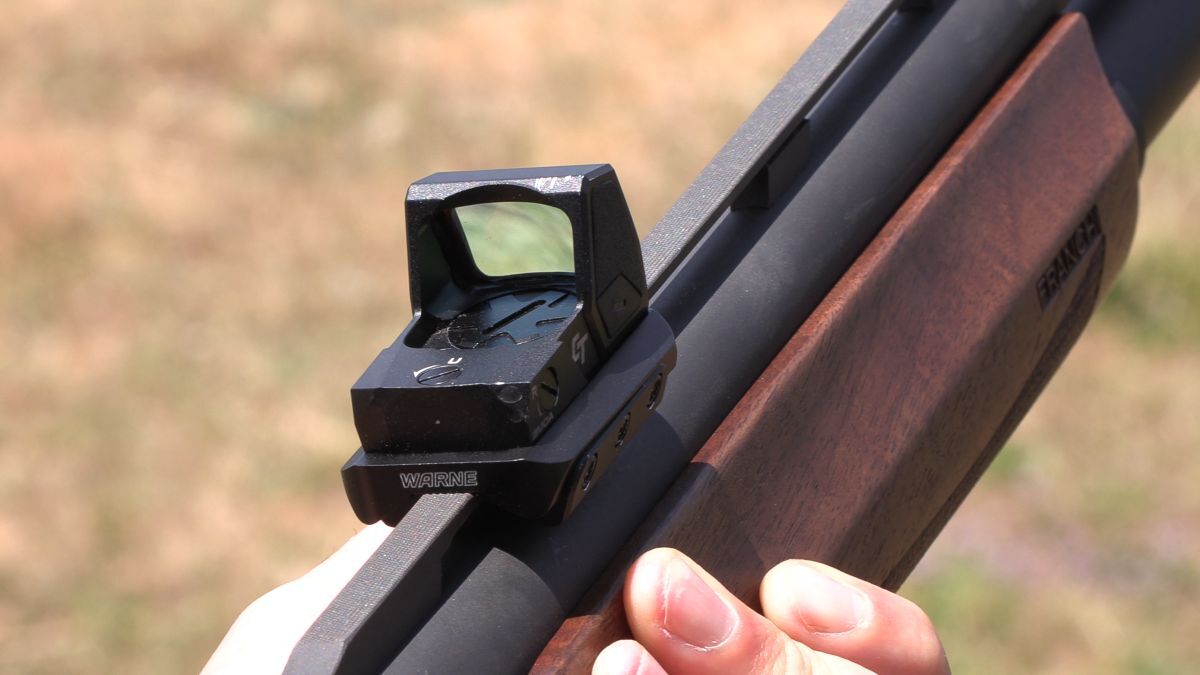
- Open Emitter Red Dot Sights
These are the most common micro red dots used on turkey guns. Also called reflex sights, there are many different options and styles available.
Pros:
- Fast target acquisition—just “put the dot on the bird”
- Precise aiming point for tight patterns
- Forgiving head position (less dependent on perfect cheek weld)
- Excellent in low-light conditions
- Unobscured sight picture
- Extends effective range through better shot placement
Cons:
- Battery-dependent (can fail if neglected)
- Lens can collect water, dirt, or debris
- Open emitter design is subject to the elements
- Potential glare or washout in certain lighting
- Requires mounting and zeroing
Open emitters are extremely popular because they balance speed and precision, but they do require some maintenance and care in the field. One major concern is mud, dirt or debris blocking the emitter leading to no visible dot on the screen, so care must be taken to keep the optic clean.
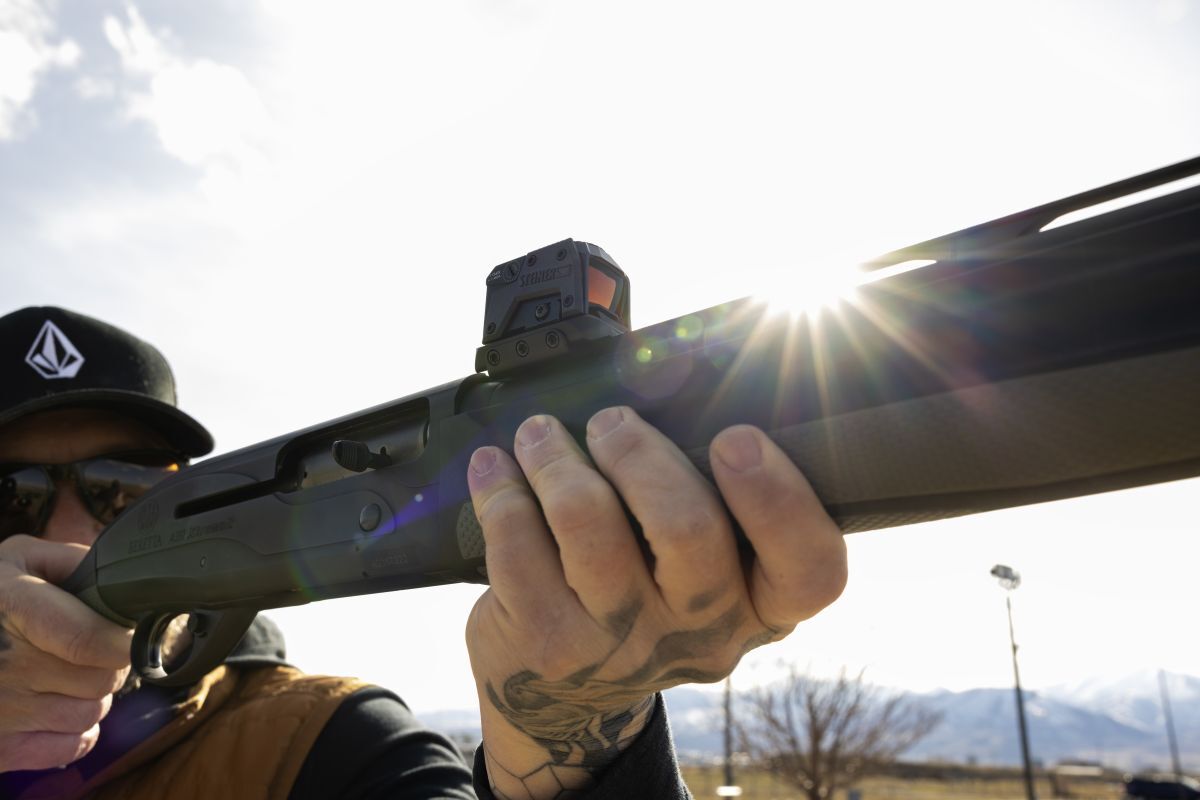
- Closed Emitter Red Dot Sights
A more enclosed, weather-resistant version of the red dot. These small enclosed red dot optics are becoming more popular, and more options are available every year. They are rugged, compact and offer some benefits compared to open emitter models.
Pros:
- Fully enclosed system protects the emitter from rain, dust, and debris
- More reliable in harsh weather conditions
- Maintains a clear aiming point in adverse environments
- Same speed and precision benefits as open emitters
Cons:
- Typically more expensive
- Slightly bulkier than open emitters
- Smaller window on some models
Closed emitters are ideal for hunters who demand maximum reliability, especially in wet spring conditions common during turkey season.
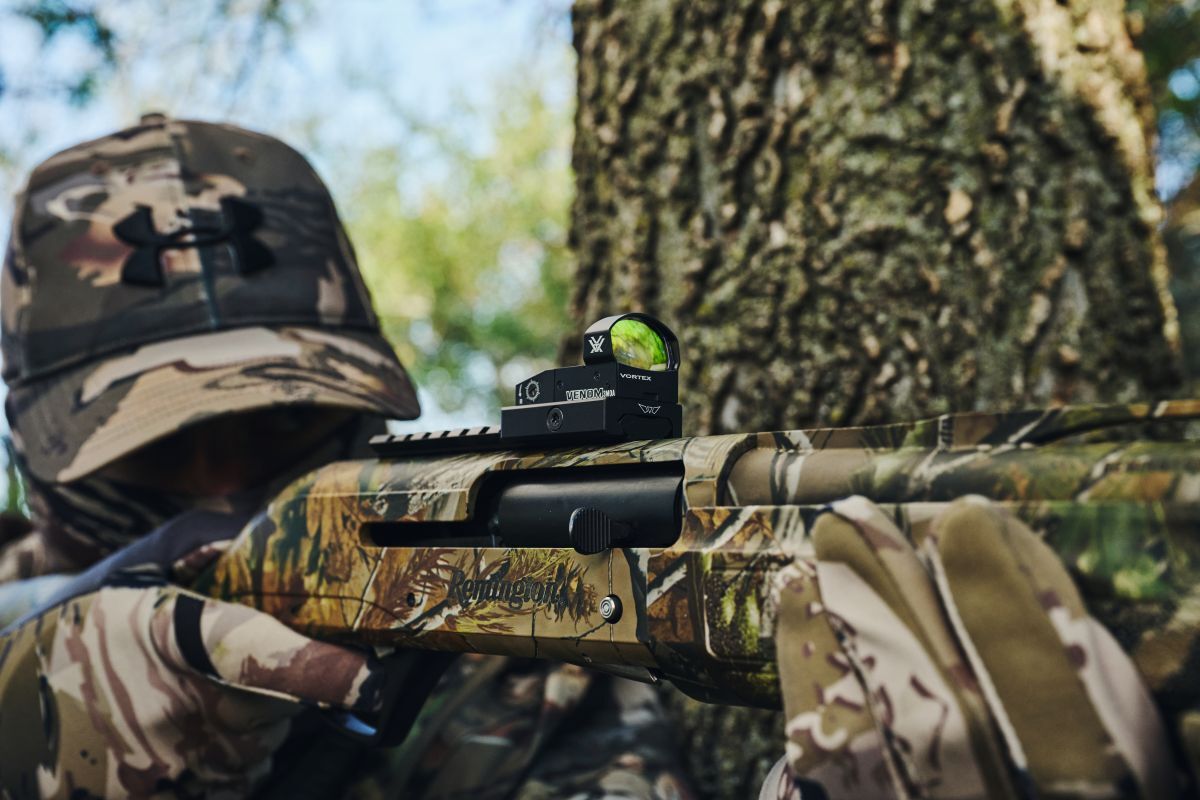
Mounting Options: Getting the Optic on Your Shotgun
If you choose to go the red dot route, proper mounting is critical. A poorly mounted optic defeats the purpose of upgrading your sighting system. Luckily, Warne® has several options depending on the red dot style you choose and type of shotgun you are planning to use.
- Picatinny Rail + Low Profile Mounts
Many modern shotguns (especially turkey specific models) come drilled and tapped for a scope base, allowing you to install a Picatinny rail, and some may even come from the factory with a Weaver or Picatinny style base installed.
From there, you can use a low-profile mount like the
Advantages:
- Rock-solid mounting platform
- Wide compatibility with most reflex style red dots
- Maintains zero under harsh recoil
- Allows for very low mounting height (better cheek weld)
Low-profile mounts are especially important on shotguns to keep the optic close to the bore axis, preserving a natural shooting position. The Warne 6109M low profile red dot mount fits common red dot interfaces like Burris Fast fire, CMORE, Doctor, Holosun 407/507, Leupold Delta Point, Shield RMS, Trijicon RMR, Vortex Razor/Viper and many more.
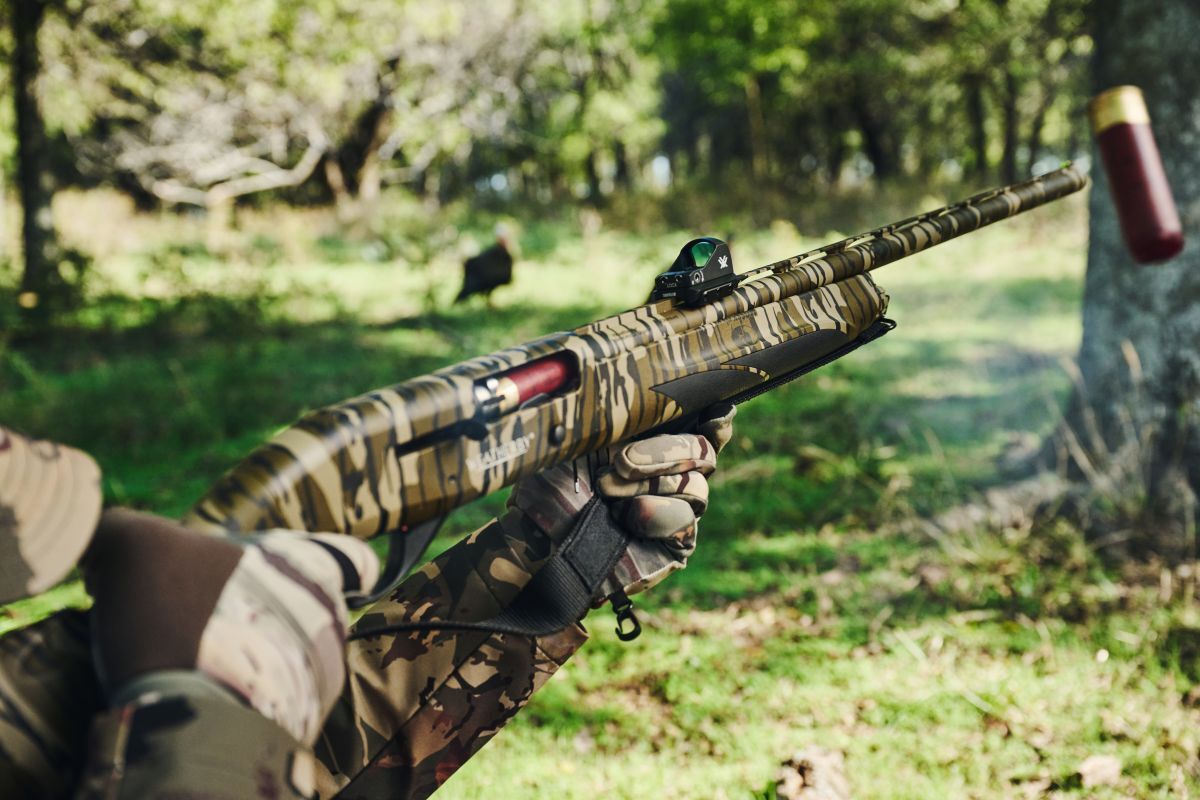
- Rib Mount Systems (No Drilling Required)
For shotguns that are not drilled and tapped, rib-mounted solutions are a game changer.
A purpose-built option like the
- Warne 6108M Reflex Shotgun Rib Mount
- Warne 6111M Aimpoint T1/T2 Rib Mount
- Warne 6112M Aimpoint ACRO Rib Mount
Advantages:
- No gunsmithing required
- Clamps directly to the vent rib
- Maintains a low-profile setup
- Compatible with a wide range of shotguns
- Made for popular open and closed emitter red dots
This style of mounting has become increasingly popular, especially for hunters who want to upgrade older or budget-friendly shotguns without permanent modification. Installation and removal is quick, easy and the most effective way to mount a red dot to a shotgun with no scope base. Read more about the Warne Shotgun Rib Mount.
Final Thoughts
Turkey hunting has evolved and so have shotgun optics. While a simple bead can still get the job done, modern red dot systems offer a clear advantage in precision, speed, and confidence.
Pairing the right optic with the right mounting solution, whether it’s a Picatinny-based system like the Warne 6109M or a rib-mounted option like the Warne 6108M, ensures your setup is not only accurate, but dependable when it matters most.
When that gobbler finally steps into range, the last thing you should be thinking about is your sight picture.